By using our website, you agree to the use of cookies as described in our Cookie Policy
Can Dog Waste Leave Long-Term Smells in Your Yard?
Most dog owners think cleanup is just about bagging it and tossing it. But the smell? That's a different beast. Even when you're diligent about picking up, odors can settle into the soil and hang around for weeks. Your yard might look clean, but the nose knows better. And if you're not addressing what's happening below the surface, you're fighting a losing battle.
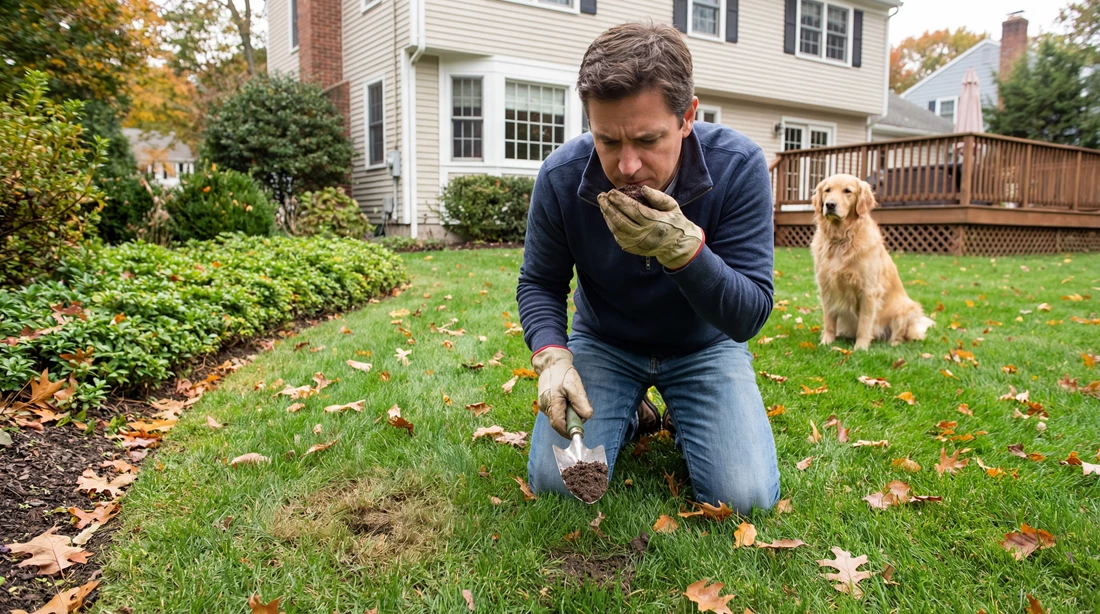
So here's what matters. Dog waste isn't just a surface problem. It breaks down, seeps in, and leaves behind compounds that don't evaporate overnight. Every pile you miss, every rainstorm that washes residue deeper — it all adds up. If you want a yard that doesn't smell like a kennel, you need more than a scooper. You need a system.
The Breakdown Happens Fast
Dog waste starts decomposing the moment it hits the ground. Bacteria go to work immediately, releasing ammonia and sulfur compounds that create that unmistakable stench. Unlike plant matter, dog waste is loaded with proteins and fats — the kind of organic material that bacteria love. The warmer it gets, the faster the process moves. And the longer it sits, the deeper those odors sink.
Rain doesn't help. It spreads the problem. Water carries waste particles into the grass, down into the soil, and across your lawn. What started as a single spot becomes a diffused odor zone. Even if you pick up the visible waste, microscopic traces remain. And those traces? They keep breaking down, keep releasing gas, and keep making your yard smell like a dog park.
Soil Holds Onto Smells Longer Than You Think
Once odor compounds penetrate the soil, they don't just disappear. Clay-heavy ground traps them. Poor drainage keeps them concentrated. And if your lawn isn't getting enough airflow or water movement, those smells settle in for the long haul. You might scrub the surface, hose down the grass, and still catch a whiff every time the wind shifts.
The type of soil you're working with makes a difference. Sandy, well-draining yards let odors dissipate faster. Dense, compacted soil holds onto everything. If your lawn has been neglected — no aeration, no regular mowing, no maintenance — it's basically a sponge for dog waste residue. And the more dogs you have, the worse it gets.
Weather Turns Up the Volume
Heat and humidity are the worst combination for yard odors. Warm air accelerates decomposition, and moisture keeps bacteria active. Summer afternoons can turn a mild smell into something unbearable. Even if you've been picking up regularly, the residue left behind gets amplified when conditions are right.
Cold weather slows things down, but it doesn't stop them. Waste that freezes in winter will thaw in spring — and all that delayed decomposition hits at once. If you've been lax about cleanup during the colder months, you'll pay for it when temperatures rise. The smell doesn't go away. It just waits.
What Actually Works to Stop the Stink
You can't just pick up and hope for the best. If you want to eliminate long-term odors, you need to address the source and the residue. That means daily removal, thorough rinsing, and treating the soil where waste has been sitting. Enzymatic cleaners break down the organic compounds that cause smells — they don't just mask them. You can find these at most pet stores. Baking soda sprinkled directly on problem areas also helps absorb odors naturally. Unlike bleach or harsh chemicals, these options are safe for grass and pets.
Here's what a solid cleanup routine looks like:
- Pick up waste every single day, no exceptions
- Rinse the spot with water immediately after removal
- Apply an enzymatic cleaner or natural vinegar solution to high-traffic potty areas weekly
- Aerate your lawn at least twice a year to improve drainage
- Mow regularly to keep grass healthy and reduce odor retention
Designating a Potty Zone Saves You Headaches
Training your dog to use one specific area makes cleanup faster and limits where odors can spread. It's easier to treat a 10-foot patch than an entire yard. You can also layer that zone with gravel or mulch, which drains better than grass and doesn't hold onto smells as long.
Some owners install artificial turf in their dog's bathroom area. It's easy to hose down, doesn't absorb odors the way soil does, and stays cleaner year-round. If you're dealing with multiple dogs or a small yard, it's worth considering. Just make sure you're still rinsing and treating the surface regularly — turf isn't maintenance-free.
Lawn Health Matters More Than You'd Guess
A thick, healthy lawn can actually help neutralize odors. Grass roots absorb moisture and organic material, and a well-maintained yard drains better. If your lawn is patchy, compacted, or struggling, it's going to hold onto smells longer. Fertilize, water, and aerate on a schedule. It's not just about aesthetics — it's about function.
Dead spots where dogs urinate repeatedly are another problem. Nitrogen overload kills grass and leaves bare soil exposed. Those patches become odor traps. Reseed them, water them, and consider using a lawn repair product designed for pet damage. The faster you restore the grass, the less time odors have to settle in.
The Tools That Make Cleanup Less Miserable
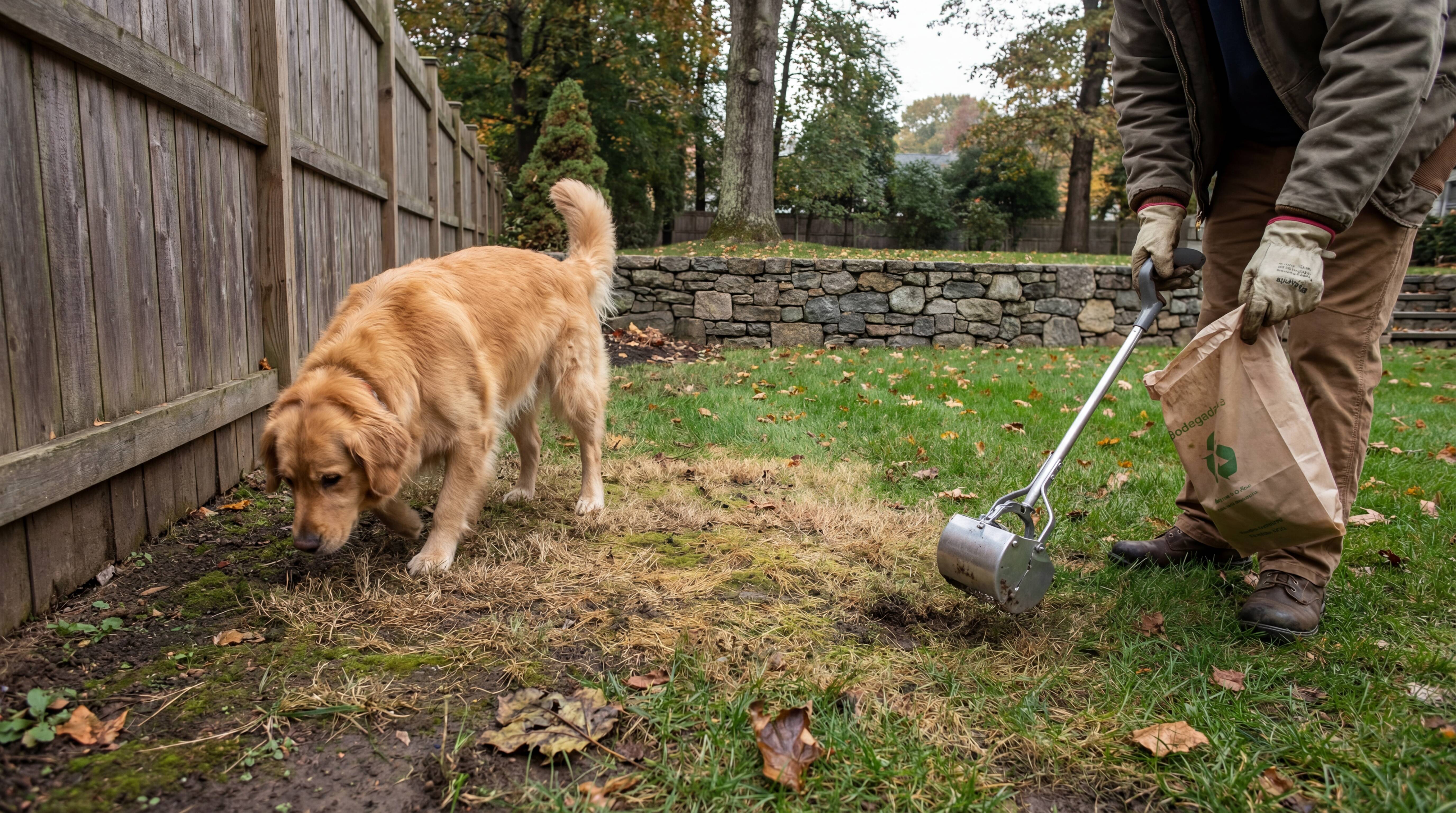
You don't need a garage full of equipment, but the right tools help. A sturdy scooper with a long handle saves your back. Biodegradable bags are better for the environment and just as effective. And a dedicated hose nozzle for rinsing waste areas keeps things sanitary.
Here's what you might want to keep on hand:
- Heavy-duty pooper scooper with a rake attachment
- Enzymatic spray bottle for spot treatment
- Outdoor trash can with a tight-fitting lid
- Garden hose with a high-pressure nozzle
- Lawn aerator for seasonal maintenance
Mistakes That Make the Problem Worse
Skipping cleanup for a few days might not seem like a big deal, but it is. Every pile you leave behind is another source of odor. And once the smell sets in, it's exponentially harder to remove. Consistency is everything.
Using the wrong cleaning products can also backfire. Bleach might kill bacteria, but it damages grass and doesn't break down organic compounds. Perfumed sprays just cover up the smell temporarily. Stick with enzymatic cleaners or natural solutions like vinegar and baking soda if you're treating small areas.
Keeping Your Yard Fresh Takes Repetition
There's no one-time fix for dog waste odors. It's a maintenance game. Daily pickup, weekly scooping, and seasonal lawn care — that's what keeps your yard from turning into a smell trap. The more dogs you have, the more diligent you need to be. But the payoff is a yard you actually want to spend time in.
Dog waste doesn't have to ruin your outdoor space. It just requires a plan and the discipline to stick with it. Clean up fast, treat the soil, and don't let residue build up. Whether you handle it yourself or rely on bi-weekly scooping or on-demand scooping from Dog Butler professionals, the long-term smells won't stand a chance.
Let’s Make Your Yard Smell Like Home Again
We all want a backyard that’s fresh, clean, and ready for family time—not one that reminds us of yesterday’s walk. If you’re tired of fighting stubborn odors or just want a break from the daily cleanup grind, let’s tackle it together. Give us a call at 203-521-0092 and let’s get your yard back on track. Ready for a yard that smells as good as it looks? Schedule a scooper visit and we’ll handle the rest.
‹ Back
Recent Posts
-
Should You Schedule a Yard Cleanup Before the Holidays in Norwalk?
October 21, 2026
-
Why Fall Leaves Make Dog Waste Harder to Spot in Norwalk
October 7, 2026
-
Can Dog Waste Create Problems for Fall Lawn Care in Greenwich?
September 23, 2026
-
Do You Need More Frequent Cleanup During the Fall Season?
September 9, 2026
-
Site by